The Sign in Which We Conquer

Sermon From The Feast Of
The Exultation of the Holy Cross 2025
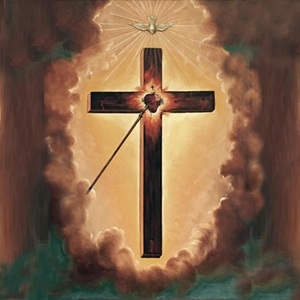
In the Old Testament the symbol of the cross was foreshadowed in the tree of the Garden of Eden, in Isaac carrying the wood to be used for his sacrifice, and in the brazen serpent lifted up on the beam to rescue the Israelites.  More importantly, this feast commemorates pivotal events in the age of salvation.  Emperor Constantine’s miraculous conquest, St. Helena’s discovery of the True Cross, and Emperor Heraclitus’ rescue of the Cross are all commemorated today.  The cross, once a symbol of hatred, has now become the greatest symbol of love.  We must not only pray for the strength to bear our crosses, but for the desire to embrace them.  Following the examples of St. Andrew and Fr. Miguel Pro, may we heroically take up our cross and follow Christ as they did before us.
#20250914B
Listen Now

Remember Your Weakness

13th Sunday after Pentecost 2025

The Collect of this Mass reminds us of the three beautiful gifts God gives us at Baptism: Faith, Hope, and Charity. Faith is that belief we have in the revelations of Jesus Christ because He is God. Hope is that virtue that helps us to persevere and trust in God’s promises. Charity is the greatest virtue here on earth. The Hebrews did not have the graces we have today. They had to struggle against themselves without the help of the New Law. In today’s Gospel we are reminded of our own weakness, poverty, and need for confident recourse to God. If our Faith is weak, we do not progress in the spiritual life. Without Faith, we cannot love God as we should. We must not neglect our thanksgiving after receiving the sacraments, especially that of Penance. The greatest hindrance to our spiritual progress is our lack of gratitude.
#20250907K

Listen Now

Members of His Body

12th Sunday after Pentecost 2025
This is one of the most beautiful Sundays of the liturgical year.  Despite the glory of the Old Law, it is nothing compared to what we have in the New Testament.  We have the Blessed Sacrament, the Incarnate God here with us at all times.  Every baptized Catholic has the Holy Trinity dwelling within him.  While attending the Holy Sacrifice of the Mass, we go back to Calvary.  In this Mass we pray that, through the grace of God, we may hurry towards the rewards God has promised us.  Let us pray often throughout the day that we may love God with our whole heart and soul, following the great examples of holiness like St. Raymond Nonnatus, St. Cuthbert, the Twelve Holy Brothers, and St. Stephen, Duke of Hungary.
#20250831S

Listen Now

Knowledge of Self

11th Sunday after Pentecost 2025

St. Paul corrected the Corinthians who doubted the General Resurrection.  Not only was the Resurrection of Our Lord a type of our own, but without this dogma, our “faith is vain.”  It was St. Paul, the Apostle to the Gentiles, who brought the Faith to the non-Jewish world.  Yet, despite all he did for the Church, he knew himself to be the least of the Apostles.  With the help of a daily examination of conscience and true self-knowledge, we too will appreciate that all the good we possess and all we accomplish in this life is due to God’s grace.  Through our examination of conscience, God allows us to see ourselves as we really are, which prepares our path to perfection.  In the words of St. Augustine, “This is the very perfection of a man, to find out his own imperfections.”
#20250824B

Listen Now

We the Hypocrites

10th Sunday after Pentecost 2025

The gifts St. Paul refers to in this Epistle were given to the early Church to help spread the Faith.  They were not meant to sanctify the one with the gift, but those who witness it.

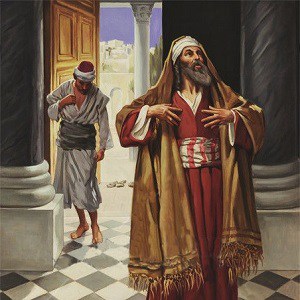
The pharisee of the Gospel begins his hypocritical prayer by praising himself, while the publican, keenly aware of his sins, refers to himself as “the sinner.”  True prayer is not self-praise, but rather the lifting up of the mind and heart to God.  It is for His glorification and our own self-abasement.

We should continually rely on our “books and beads” to better participate in the liturgy, so that we may progress through the stages of the spiritual life.  By tapping into these prayers, we may be united to the never-ending prayer of Christ.
#20250817M

Listen Now

The First Fruit of the Redemption

Assumption Evening 2025
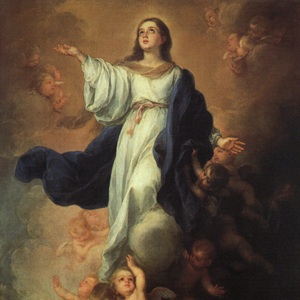
Judith of the Old Testament is a figure of the Blessed Virgin Mary who crushes the head of Satan and defeats sin.  In the Gospel, the Blessed Mother was early with child when she traveled to visit her cousin Elizabeth. With the infant Jesus only three days old in her womb, the Virgin Mary was affirmed by St. Elizabeth to be the Mother of God.  Tradition teaches us that when the Blessed Mother was near death, the Apostles were inspired to come to the place where she was to die.  Before the Apostles’ very eyes, she rose from the dead and was assumed into Heaven.  The Blessed Mother is the first fruit of the Redemption.  It was only in view of the coming Redemption that she was preserved from Original Sin.  Today is a true homecoming.  Heaven, not Earth, is our home, and we pray that Our Lady will lead us to that home one day.
#20250815K

Listen Now

Hail Mary, Full of Love

Feast of the Assumption 2025
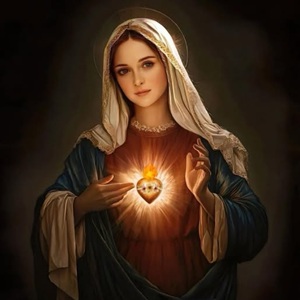
In the Epistle for today’s feast, the applied sense of Scripture is used to connect Judith’s conquest over the prince of the Hebrew’s enemies in the Old Testament to the Blessed Virgin Mary’s victory over the Prince of Darkness.  The passive word Assumption is used to express the direct action of the Trinity on Our Lady in bringing her, body and soul, into Heaven.  One can only imagine the great joy in Heaven at the entrance of its Queen.  In the Hail Mary we are meant to greet the Holy Virgin with fervor and love.  Divine Charity, which we possess in Sanctifying Grace, far surpasses the greatest and most noble of human love.  The intensity of this Divine Love in the Blessed Mother is unimaginable, and it transformed even her smallest works into actions warranting the greatest merit.  What our Savior desires most from us is that we love Him in return.
#20250815

Listen Now

No Longer Slaves of the World

9th Sunday after Pentecost 2025
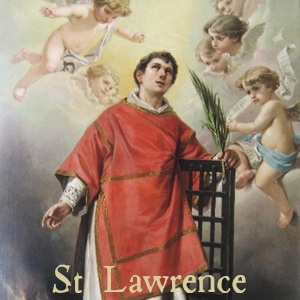
When St. Lawrence was commanded to turn over all the treasures of the Church to the Roman rulers, the holy deacon brought all the poor among the Christian faithful before the Roman prefect. St. Lawrence desired to show them that the true treasures of the Church are to be found in the poor and humble. He was martyred by being burned alive, and his heroic endurance of this torture showed his complete union with Christ in prayer.

The theme of the Epistle for this Mass is conversion of life. St. Paul reminds the Corinthians not to fall back into sin, particularly sins of the flesh. He uses examples from the Old Testament to warn us about the punishments in store for those who turn away from God. Although, as Christians we remain ever hopeful, let us never presume we are safe in our spiritual life. Souls holier than we have fallen.
#20250810K

Listen Now

Never Forget the Gifts You Receive

8th Sunday After Pentecost 2025
The whole world is dependent on the Holy Sacrifice of the Mass. The merits of the death of Our Lord are being poured out around the world to this very day. We should always be prepared to make an answer to God for how we have chosen to spend the life He has given us. The unjust steward of the parable is praised by his master, not for his deception, but for his forethought and planning. If we were to preserve the spiritual riches we possess as those in the world protect their riches, we would surely save our souls. We should thank Our Lord daily for the spiritual and temporal gifts we have been given.
#20250803S

Listen Now

To Bear Our Fruit in Due Season

7th Sunday after Pentecost 2025

The main theme of this Mass is the tree and the fruit it bears.  When we practice good works, we bear good fruit and edify our neighbor, but if we practice evil, we bear bad fruit and scandalize our neighbor.  Our Lord warns us to beware of false prophets and tells us to judge them by their fruits.  Immodesty among Catholics offends the Sacred Heart of Jesus and is a temptation to our neighbor, so we must strive to remain always modest, especially during the heat of summer.  It is important for all Catholics to read the lives of the saints so we might imitate their virtues and become “the tree planted beside the water, which bears fruit in due season.”
#20250727K


Listen Now